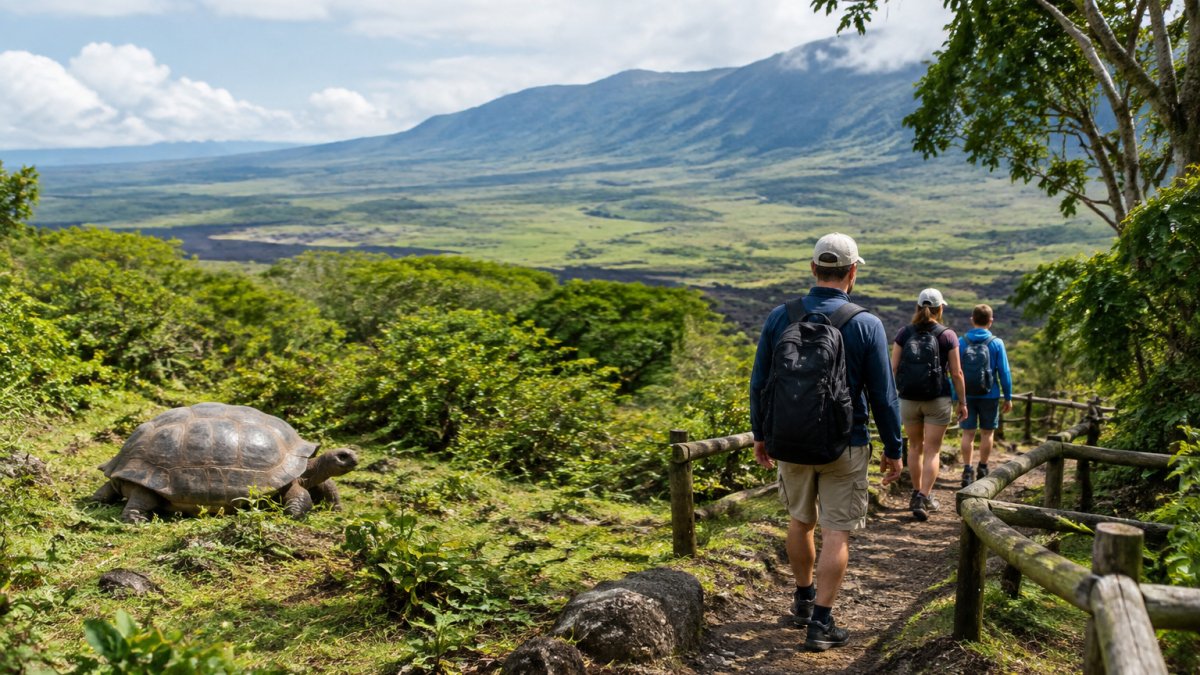
 How-to
How to Travel to the Galapagos Highlands: A Practical Guide
Last Updated: November 19, 2026
Quick Summary
To travel to the Galapagos Highlands, fly into Baltra airport, cross by ferry to Santa Cruz, then take a taxi or pre-booked transfer up to the highlands. Agree on fares before setting off. Taxis are the most flexible option, while local buses run on set routes with irregular schedules.
- Fly into Baltra airport, then cross the channel to Santa Cruz by ferry.
- Pack light, with one main bag plus one day pack, because ferries and taxi trunks have limited space.
- Taxis are the fastest and most flexible option; agree on a round-trip price first.
- Local buses are cheapest but slower and less predictable, so check times in advance.
- Confirm your pickup with the hotel before you leave the airport.
Table of Contents
- Why Stay in the Galapagos Highlands Instead of Puerto Ayora?
- How to Get from Baltra Airport to Santa Cruz
- Getting Around the Highlands: Taxis, Buses and Tours
- Planning a Santa Cruz Highlands DIY Tour
- Choosing a Santa Cruz Highlands Half-Day Tour
- What to Pack, Best Season and Accessibility Tips for the Highlands
- Booking Your Highlands Stay and Transfers
- Frequently Asked Questions
Why Stay in the Galapagos Highlands Instead of Puerto Ayora?
Planning how to travel Galapagos Highlands starts with one choice: where to sleep. Most visitors default to Puerto Ayora, the main town on Santa Cruz Island. Staying up in the highlands gives you quieter nights and green surroundings. The trade-off is that you need a plan for getting to town.
The highlands suit travelers who want rest after a busy day of hiking or snorkeling. Nights are generally quiet, and the air is cooler than on the coast.
Puerto Ayora still wins on convenience. Restaurants, banks, dive shops and boat departures are all within walking distance. If you plan to take many early-morning boats, town may suit you better.
- Choose the highlands if: you want quiet, green space and a slower pace.
- Choose Puerto Ayora if: you need walkable access to boats, banks and restaurants.
- Consider both: split your stay to get the benefits of each.
Here is a quick comparison to help you decide:
| Factor | Highlands | Puerto Ayora |
|---|---|---|
| Noise level | Quiet, natural | Busier, town sounds |
| Getting to town | Taxi or bus needed | Walk to most places |
| Setting | Misty forest, green space | Waterfront, shops |
| Best for | Rest and relaxation | Boat trips and nightlife |
How to Get from Baltra Airport to Santa Cruz
Most flights to the Galápagos land at Baltra airport, on a small island just north of Santa Cruz. Check the hotel services for any transfer or pickup options before you travel. From there, you cross a narrow channel by ferry and then travel by road to the highlands.
The general route from Baltra is:
- Collect your luggage and clear airport formalities, including the national park entry fee.
- Walk or take the shuttle to the ferry dock on the Baltra side.
- Cross the channel by ferry to Santa Cruz.
- Arrange a taxi or pre-booked transfer from the Santa Cruz dock toward the highlands.
- Confirm your pickup with the hotel before you leave the airport.
Ask Twin Hotel Galápagos about transfer options before you arrive, and use the Contact page to get in touch.
Luggage Logistics for Airport-to-Hotel Transit
Luggage causes the most trouble on this route. Ferry crossings and taxi trunks have limited space, so pack light and use one main bag plus one day pack. Keep valuables and medication in your carry-on in case a bag is delayed.
- Keep your daypack with you at all times.
- Label every bag with your name and hotel.
- Ask your transfer driver how much luggage the vehicle can carry.
Getting Around the Highlands: Taxis, Buses and Tours
Getting around the highlands takes some planning. Taxis are a direct option. Local buses run on set routes, and schedules can be irregular, so check times before you rely on one.
Here is how the main options compare:
- Taxi: Fastest and most flexible. Agree on a round-trip price before you ride.
- Bus: Cheapest, but slower and less predictable. Good for flexible travelers with time.
- Tour: Includes a guide and transport. Best if you want no coordination at all.
Agree on fares with the driver before you set off. This avoids surprise charges when you return.
Planning a Santa Cruz Highlands DIY Tour
A do-it-yourself highlands day can be planned as a loop rather than a list, with the order of stops mattering as much as the distance between them.
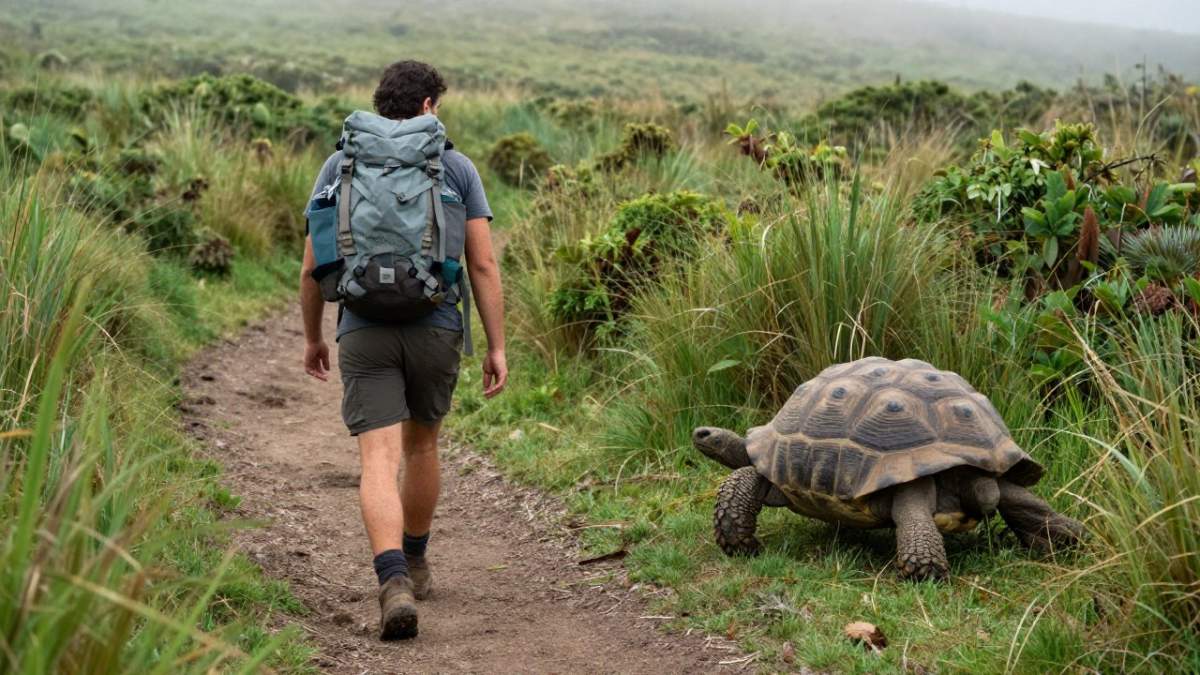
The classic DIY loop, from town outward, runs like this:
- Los Gemelos (Twin Craters), two collapsed lava chambers flanking the road, each with a short rim trail. This is the highest and coolest stop, so it works well first thing in the morning before mist burns off.
- A tortoise ranch in the agricultural zone, several private ranches sit along the same road and allow self-guided walking among free-roaming giant tortoises.
- A lava tunnel, privately operated tunnels near the ranch belt have marked walkways, handrails and lighting; you walk through without a guide, but the floor is uneven and drips from the ceiling are constant.
- El Chato or a similar reserve, if you want a second tortoise stop with a visitor center and clearer signage, add one on the return leg.
Grouping stops by road segment cuts your taxi time and fare.
Giant Tortoise Reserves and Lava Tunnels Without a Guide
Sturdy shoes matter more than any other item, since the ranch ground is often wet and the tunnel floor is uneven.
A common mistake is arriving late in the day. Go early, when tortoises are more active and the trails are cooler. Carry water and sun protection, because shade is limited on the crater rims even when the ranch itself is wooded.
Tip: Some areas reward a naturalist guide, particularly if you want to understand the difference between the island's tortoise species and the conservation work behind the reserves. Hiring a guide for one stop rather than the whole day keeps costs down.
Choosing a Santa Cruz Highlands Half-Day Tour
A half-day tour suits travelers with limited time. It typically covers two or three sites in roughly four hours and returns you to your hotel or to town for the afternoon. The difference between a good and a poor half day is almost never the sites, it is what the price includes and how the operator sequences the stops.
Half-day highlands tours generally take a few common forms:
- Tortoise-and-tunnel circuit: the most common format, pairing one or two ranches with a lava tunnel. Good for first-time visitors who want the headline experiences without a full day.
- Crater-and-ranch circuit: Los Gemelos plus a single ranch, with more walking and less driving. Better for travelers who prefer trails to tunnels.
- Private car with driver-guide: you set the order and the pace, and the operator supplies a licensed naturalist guide. Pricier per person, but the only format that lets you linger at one site and skip another.
Compare inclusions carefully, because the headline price rarely tells the whole story. Ask specifically whether the quoted rate covers transport, the ranch entry fee, the tunnel entry fee, and a guide, or whether those are collected separately on the day. A tour that looks cheaper up front can cost more once entry fees are added at each stop.
Ask these questions before you book:
- Does the price include transport, ranch entry and tunnel entry, or are they paid on site?
- How long is the tour door-to-door, and how much of that is walking versus driving?
- Is a licensed naturalist guide included, and what language do they speak?
- What is the vehicle capacity, and how much luggage can it carry if you are heading straight to the airport afterward?
- Can you change the start time or pickup point, and is there a cancellation window?
Watch out: some half-day tours are timed to drop you at the Baltra ferry rather than back at your hotel, which is convenient if you are flying out but useless if you are staying in the highlands. Confirm the drop-off point before you pay, and confirm whether your luggage can ride with you if you are transiting to the airport.
If you are staying in the highlands rather than in town, tell the operator your pickup location when you book, so the tour can collect you from your accommodation.
What to Pack, Best Season and Accessibility Tips for the Highlands
Pack for changing weather. The highlands can be misty and cool, even when the coast is warm. Bring a light rain jacket, layers, sturdy walking shoes and sun protection. A small first-aid kit and a reusable water bottle are also useful.
The best season depends on what you want. The drier months suit long walks, while the wetter months bring lush greenery. Plan around your priorities and check conditions before you travel.
Accessibility can be a concern on uneven trails. Travelers with mobility limits should ask their hotel which sites have level paths and whether transport can reach the entrance. Many sites offer shorter loops for visitors who cannot walk far.
Sustainable travel matters here. Stay on marked trails, do not feed wildlife, and bring out everything you carry in. Small choices protect the fragile island ecosystem for future visitors.
Booking Your Highlands Stay and Transfers
Booking early helps you secure your preferred room. Twin Hotel Galápagos offers 15 rooms, a 24-hour reception, free parking and a swimming pool surrounded by green space with hammocks. Browse the Rooms and Suites page to find the right room type for your group.
Confirm your arrival details before you travel. You can reach the team through the Contact page to check availability.
Pricing depends on dates and room type. Check the hotel's website or contact the team directly for current rates in USD.
Frequently Asked Questions
How do you get from Baltra Airport to the Santa Cruz Highlands?
Most travelers take the short ferry from Baltra Airport across the channel to Santa Cruz, then continue by pre-booked taxi or shuttle up to the highlands. The ferry and taxi fares are paid separately and are best confirmed with your lodging before you arrive. Keep your luggage with you on the ferry and load it into the taxi yourself, since drivers rarely carry bags beyond the vehicle.
Can you visit the Santa Cruz Highlands without a tour?
Yes. Independent travelers can reach the highlands by taxi and visit major sites such as the giant tortoise reserves, lava tunnels and the twin craters on their own schedule. A licensed naturalist guide is recommended at protected visitor sites, and entry fees are paid separately.
Is it better to stay in the Santa Cruz Highlands or in Puerto Ayora?
Staying in the highlands offers quiet surroundings, green space and a cooler climate, which suits families and travelers who want rest after hiking or snorkeling. Puerto Ayora offers more restaurants, shops and easy walking access to the harbor. The trade-off is that highland stays depend on taxis for most trips into town. Consider how often you plan to visit the town center before choosing.
How long should you spend in the Santa Cruz Highlands?
Most visitors allow at least one full day to see the giant tortoise reserve, lava tunnels and twin craters at an unhurried pace. A half-day visit works if you focus on one or two sites and have transport booked. Two nights in the highlands give you time for a DIY visit plus a rest day. Allow extra time during the rainy season, when paths can be muddy and visibility changes quickly.
